
How Do I Value My Home Without a Realtor? An Idaho Falls Guide
A lot of folks in Idaho Falls want a number in their head before they ever talk to an agent. I get it. You don't want to be sold to, you just want to know where you stand. The good news is you can get a pretty solid idea of your home's value on your own. The catch is that Idaho makes it harder than most states, and I'll explain why. If you'd rather skip the homework, you can always get a free Idaho Falls home value estimate with no strings attached, and use it as one more number to check your own work against.
Why valuing a home on your own is tricky in Idaho
Here's something most sellers don't know. Idaho is a non-disclosure state. That means the price a home sells for doesn't have to be recorded in public records. In a lot of other states, you can look up what your neighbor's house sold for on the county website. Here, you usually can't.
The real sold prices go into the multiple listing service that agents use, but that isn't public. So when you see a "sold" home on a big real estate website, the price shown may be the last list price, not what it actually closed for. Those can be pretty far apart, in either direction. That's one of the big reasons online estimates in Eastern Idaho can wander, which I dig into in how accurate online home value tools really are.
None of this means you can't do it. It just means you need to be a little more careful about where your numbers come from.
Step 1: Get your own home's facts straight
Before you compare anything, write down the basics about your place: finished square feet above ground and in the basement, bedrooms, bathrooms, garage stalls, lot size, year built and the age of the big stuff like the roof, furnace and water heater. Then be honest about condition. Is the kitchen original? Is the carpet tired? Did you finish the basement yourself?
Check the county assessor's record for your home too. Sometimes the square footage or bedroom count is wrong, and that same wrong info can feed the online estimates.
Step 2: Find homes like yours that actually sold
This is the heart of it. Appraisers and agents both lean on recent sales of similar homes, and you can do a simpler version yourself.
- Stay close. Look in your own neighborhood or subdivision first. A house in Ucon and a house in a newer Idaho Falls subdivision can be worlds apart even with the same square footage.
- Stay recent. Sales from the last few months tell you the most. Older sales may not reflect where the market is now.
- Stay similar. Same style, similar size, similar age, similar lot. A rambler with a basement and a two-story aren't great matches, even on the same street.
Since sold prices aren't public here, you'll have to piece it together. Sold listings online, homes you watched go under contract, and neighbors who are willing to share all help. Just treat any "sold price" you find online as a clue, not a fact.
Step 3: Look at your competition
Buyers don't only compare your house to what sold last spring. They compare it to what they can buy this weekend. Pull up the active listings near you that match your home and look at the photos closely. How does your kitchen stack up? Your yard? Your garage?
Also notice which homes have been sitting a long time. If a similar house has been on the market for months, the price is probably the problem, and that tells you something about the ceiling in your area. If you want a second set of eyes on what you find, my free home value report pulls in the closed sales data you can't easily see on your own.
Step 4: Adjust for the differences
No two homes are the same, so you'll need to adjust. If a comp had a brand-new kitchen and yours is original, your home is probably worth less than it sold for. If yours has an extra garage stall or a bigger lot, it may be worth a bit more. Rural homes and acreage around places like Rexburg or Ucon are the hardest to adjust, because there are fewer true matches.
Don't aim for one perfect number. Aim for a realistic range. If two or three really good comps point to the same range, you're probably close.
For a deeper walk-through of the math, see my post on how to calculate what your house is worth.
Step 5: Know when to bring in a pro
Doing it yourself works best for a typical home in a busy neighborhood. It gets harder if your home is one of a kind, sits on acreage or has had a lot of updates. In those cases, you have a few options. You can pay for an appraisal, which I talk about in whether to get an appraisal before listing, or you can ask an agent for a market analysis. A good one will show you the actual closed sales, not just a number.
That second option doesn't lock you into anything. I'll show you the comps and talk it through, and you decide what to do with it.
Why I'm happy to help either way
I've lived in Eastern Idaho for about 15 years, and I started Smart Seller because sellers deserve straight answers and options that fit their situation. Some people want full help. Some want to do as much as they can themselves. My Smart Seller listing programs are built with that in mind, and you can cancel anytime. You can read a little about me or see the towns I cover on my Idaho Falls real estate page.
When you're ready to check your own math, get your free home value estimate and I'll walk you through the real numbers behind it. Or email me at alan@smartselleridaho.com. - Uncle Al
Idaho Falls Home Seller FAQs
Can I find out what my neighbor's house sold for in Idaho?
Usually not from public records. Idaho doesn't require sale prices to be recorded publicly, so the county site won't show it. You can ask your neighbor, or ask an agent, who can see closed prices in the MLS.
Is the county assessed value the same as what my home is worth?
Not really. The assessed value is set for property taxes and can lag behind the market. It's a decent sanity check, but I wouldn't price a home in Idaho Falls or Rigby off it.
How many comps do I need to price my house?
Two or three really good matches beat a dozen loose ones. Look for homes close by, sold recently, and similar in size, age and condition.
Can I get a home value without talking to an agent?
Yes. You can run your own comps, average a few online estimates as a ballpark, or pay for an appraisal. A free online estimate is another quick option, and asking for one doesn't commit you to anything.
Is it worth paying for an appraisal if I'm selling on my own?
It can be, especially for acreage or a unique home where comps are thin. Just remember the buyer's lender will order its own appraisal, so yours is a pricing tool, not the final word.
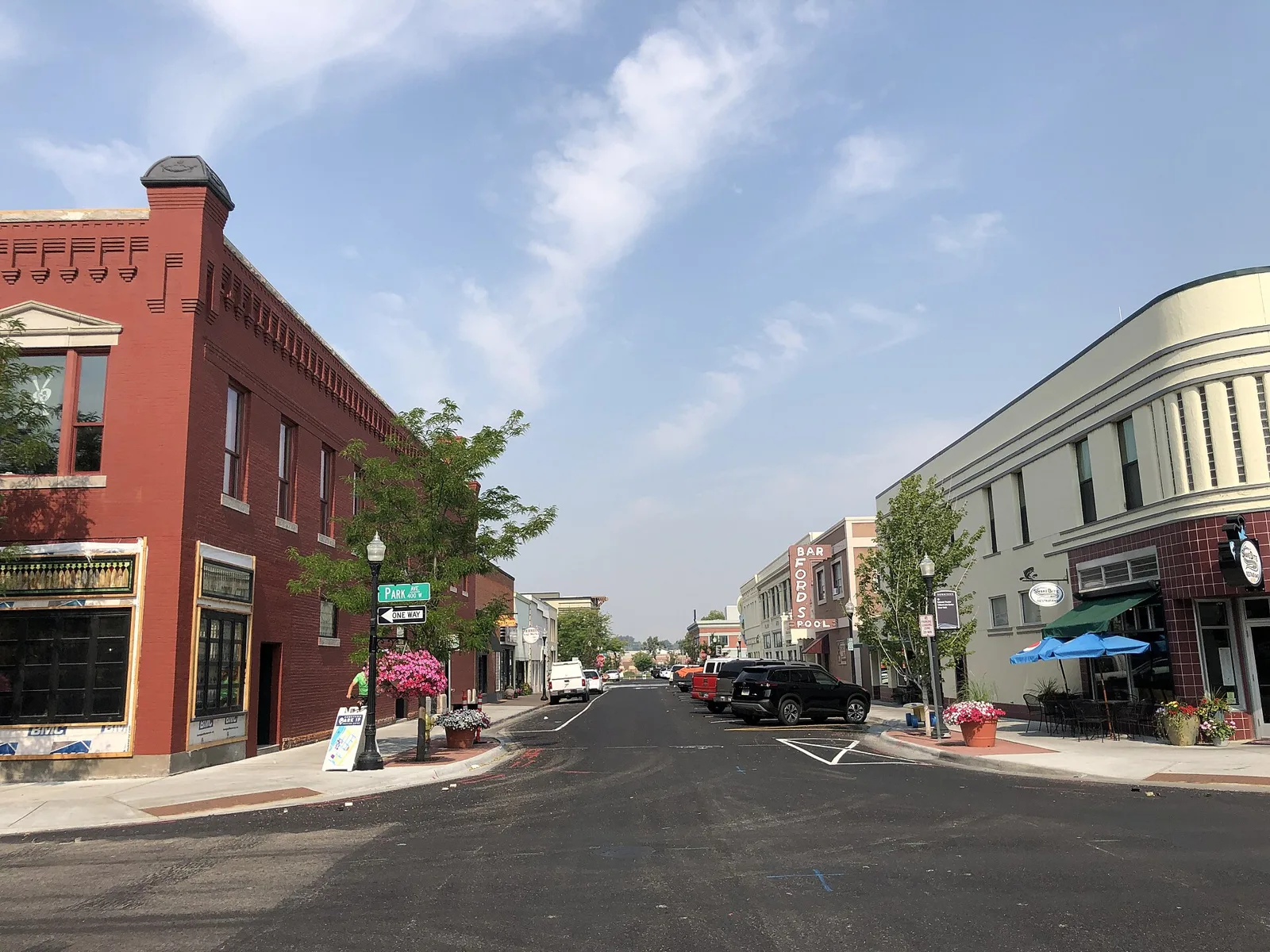
Photo: Downtown Idaho Falls, Idaho, by Steven Pavlov / Wikimedia Commons, CC BY-SA 4.0

What's your Idaho Falls home worth?
Get a free home value from Uncle Al. No pressure, no obligation.
Get my free home value